It is our intention to carry out a nation-wide programme of education that will bring home to the men and women of all national groups the realisation that freedom cannot be won for any one section or for the people as a whole as long as we women are kept in bondage.
– The Women’s Charter, adopted by the inaugural conference of the
Federation of South African Women. 17 April 1954, Johannesburg
Photography books were more plentiful than family photo albums in my childhood home, and the faces of women like Winnie Madikizela-Mandela and Miriam Makeba often seemed to me like the family friends that surrounded my mother — strong, intelligent, ambitious, stylish women. Alf Kumalo’s humanistic eye, visible throughout this selection of photographs, heightens that feeling. The ease of their movements and their readiness to smile often belies the reasons for their convening
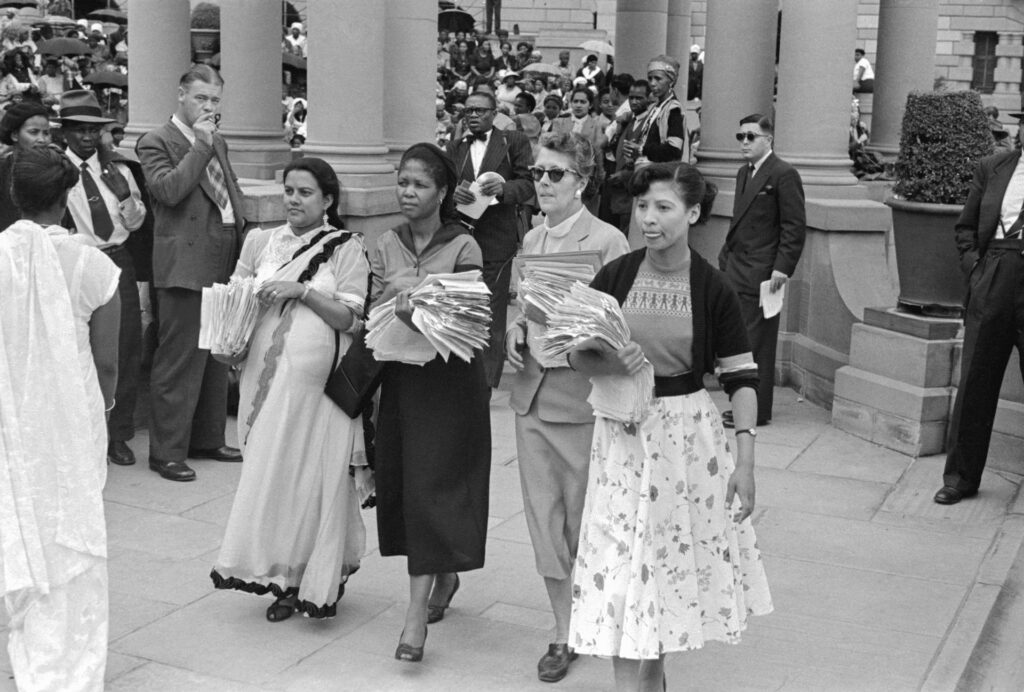
In one of the most iconic images in the selection, Kumalo captures the moment that Rahima Moosa, Lilian Ngoyi, Helen Joseph, and Sophia Williams-De Bruyn approached the architecturally — and politically-imposing Union Buildings with 14 000 petitions in hand and an estimated 20 000 women following in support. They appear unshaken by the gaze (and hopes) of thousands of supporters resting upon them, and the ominous presence of the Special Branch of the South African police. Though Williams-De Bruyn —the youngest among them at only 18 years old— licks her lips in what might have been a nervous gesture, in contrast to the frozen expressions of awe and disapproval by the lookers-on, the lightness of the action makes her and the group seem even more familiar.
The Women’s March, which took place on 9 August 1956 (memorialised by National Women’s Day), was primarily directed towards the government’s amendments to Pass Laws (the Urban Areas Act) which extended their control over Black women’s movements and further economically disempowered them. Though their action was dismissed by the autocratic government, this display of mass mobilisation and unity across races was a triumph for the intersectional politics of the Federation of South African Women (FEDSAW), formed only two years prior.
Often the threads that bound these women together were those of labour rights, and the trade unions were the entry point of many lifetimes of political activism. At the time of the organisation’s creation, Moosa had been a shop steward for the Cape Town Food and Canning Workers Union, Ngoyi was a steward at the Garment Workers’ Union where Joseph had also worked, and Williams-De Bruyn was a steward at the Textile Workers’ Union in Port Elizabeth and a founding member of the South African Congress of Trade Unions.
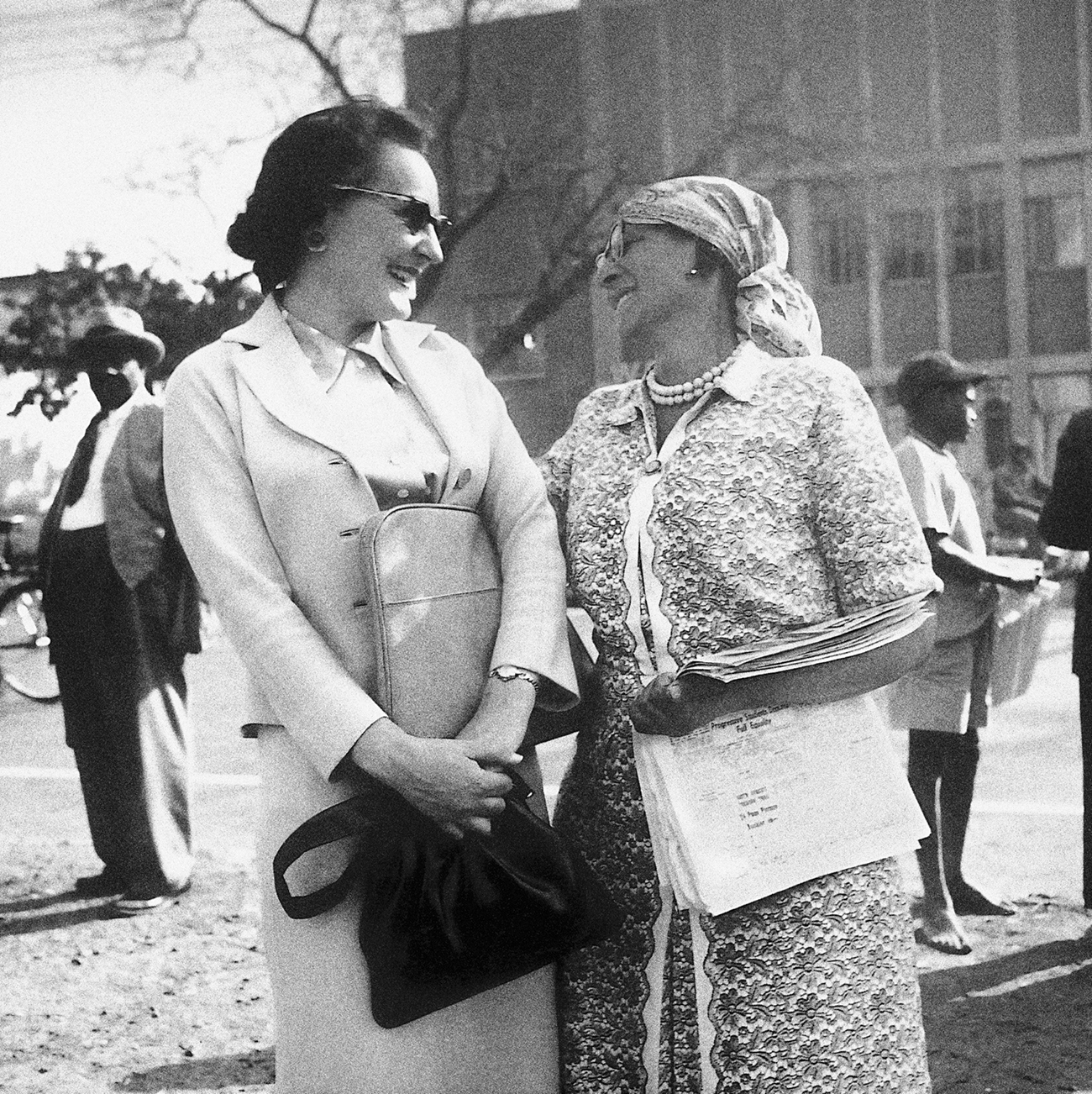
A few months later, on 5 December 1956, the Treason Trials began. Ngoyi, Joseph, and Rahima Moosa’s husband Dr Hassen Mohamed Moosa were among the 140 activists detained in the multiple waves of arrests. Other detainees of the Trials can be seen in the image selection: Frances Baard, one of the leaders of the Women’s March and a co-drafter of the Women’s Charter, Ruth First who was on the drafting committee for the Freedom Charter in 1955 and was later assassinated in Mozambique by the security police, and Bertha Gxowa who co-founded FEDSAW.
Similarly, despite being subjected to continuous violence from the state, Dr Mamphela Ramphele looks tranquil as she attends to a patient in Tzaneen. She had been detained and then banished to the rural community in Limpopo months before the 1977 assassination of Steve Biko, the father of two of her children. Her first-born died at two months old, and Ramphele learned of Biko’s murder while pregnant with her second.
For the Suffering Widows
A recurring forbearing figure in Kumalo’s work is that of Albertina Sisulu, who created an organisation for wives made widows by the imprisonment of their husbands. She and Winnie Madikizela-Mandela were often photographed as they attended the Rivonia Trial in support of Walter Sisulu and Nelson Mandela, Secretary-General and President of the African National Congress (ANC), who were both sentenced to life on Robben Island. Madikizela-Mandela and Sisulu were known in the press for advocating for the freedom of their husbands, but they were activists in their own right and were arrested and banned often.
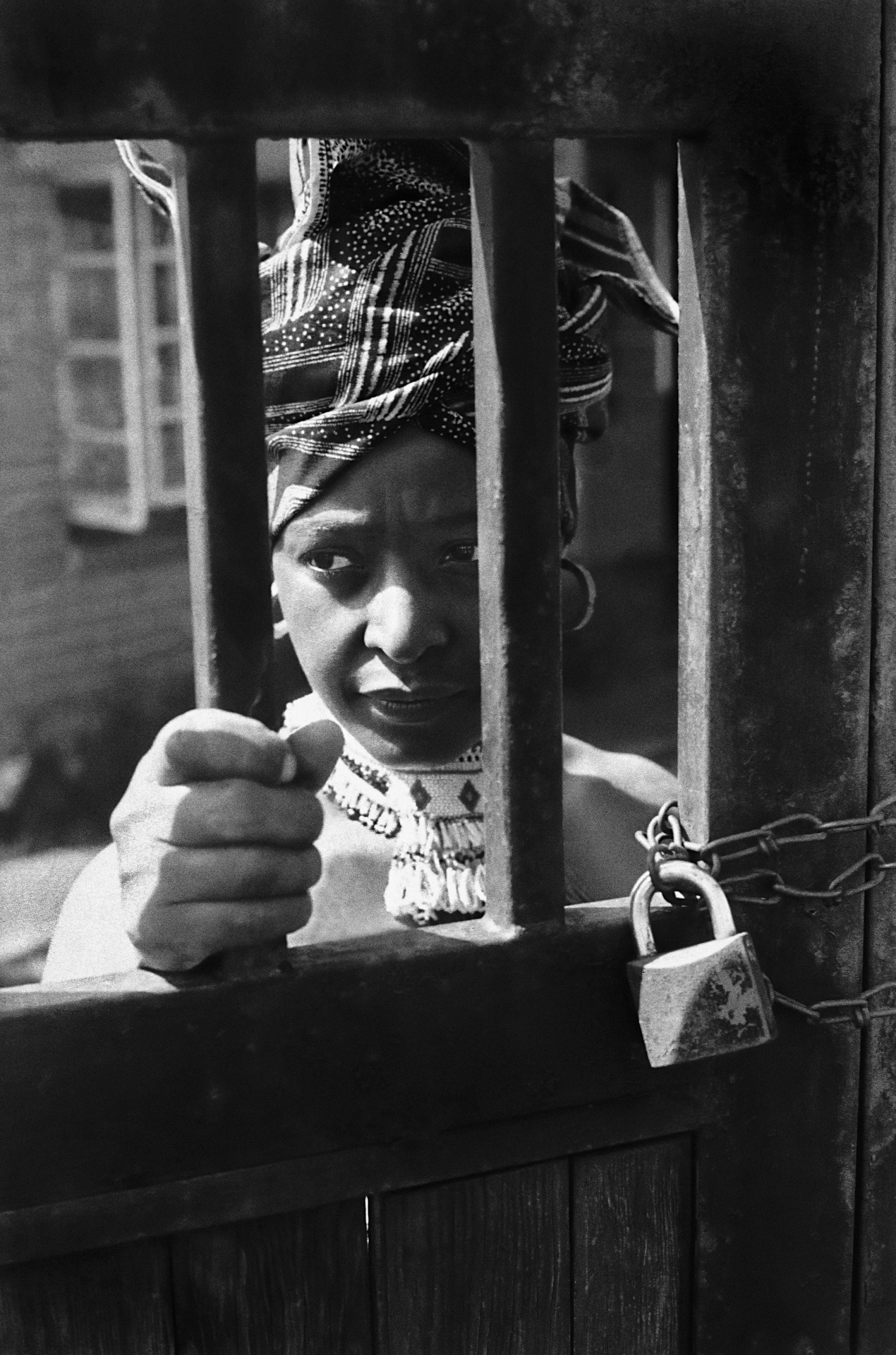
Kumalo photographed the young and charismatic Madikizela-Mandela in her and her husband’s Vilakazi Street home many times after his conviction. In each image, she is extraordinarily expressive. She looks wistful and child-like as she performs household tasks, and her gaze is fierce and charming as she hosts Sabata Dalindyebo, the Chief of amaThembu, and journalist (and my grandfather) Harry Mashabela. Kumalo and Mashabela worked together at the Golden City Post and travelled overseas for the first time together in 1963 to cover a story for Drum on African students in the USSR, becoming lifelong friends.
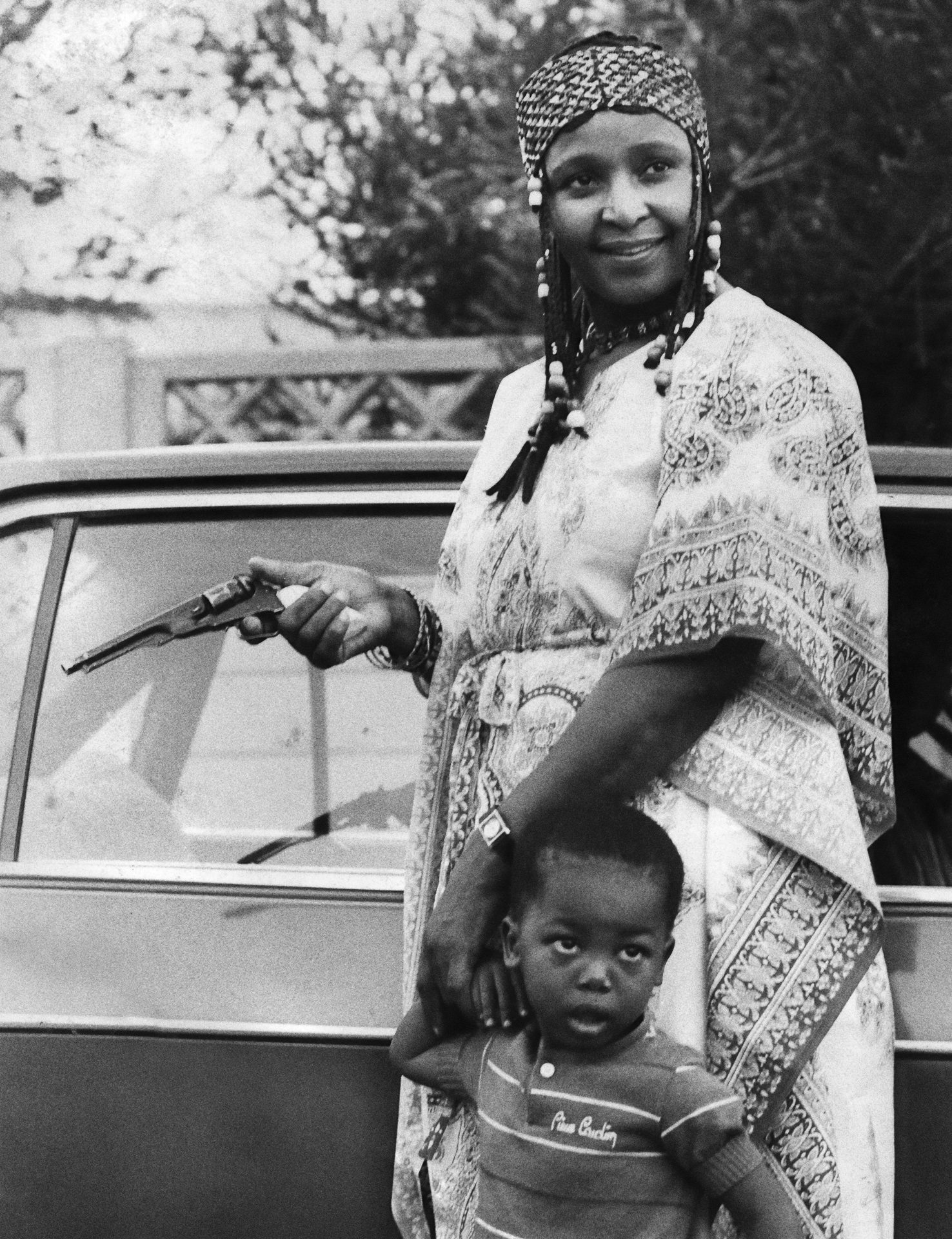
One of the most striking images of Madikizela-Mandela is of her holding her grandchild with one hand and a toy gun with the other. Though well-loved by supporters of the ANC, her legacy was complicated for some because of her willingness to use fatal force against suspected police informants (though I believe this view relies upon understating the broader involvement of the ANC in violence against a government who tortured many, including Madikizela-Mandela herself).
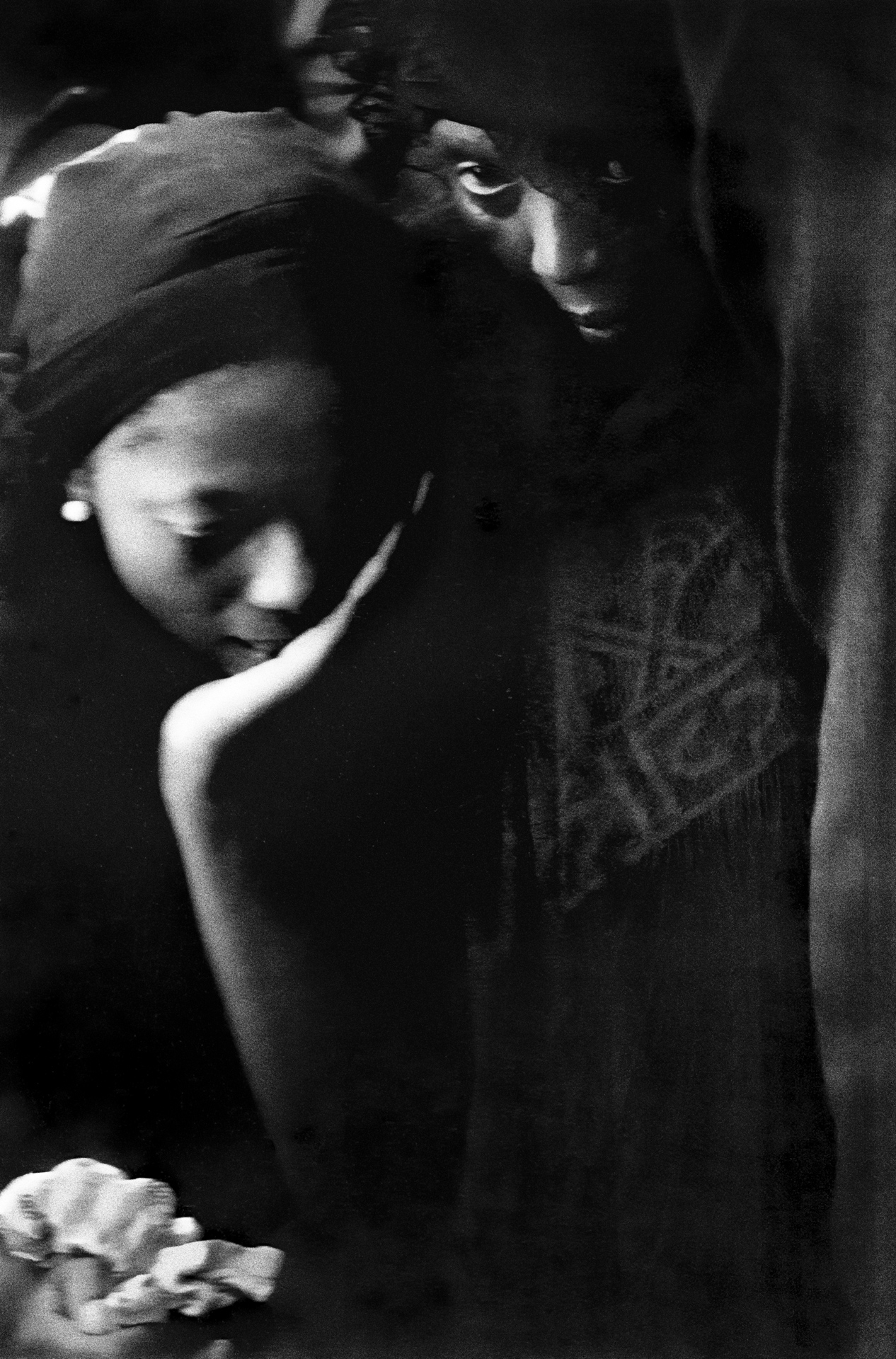
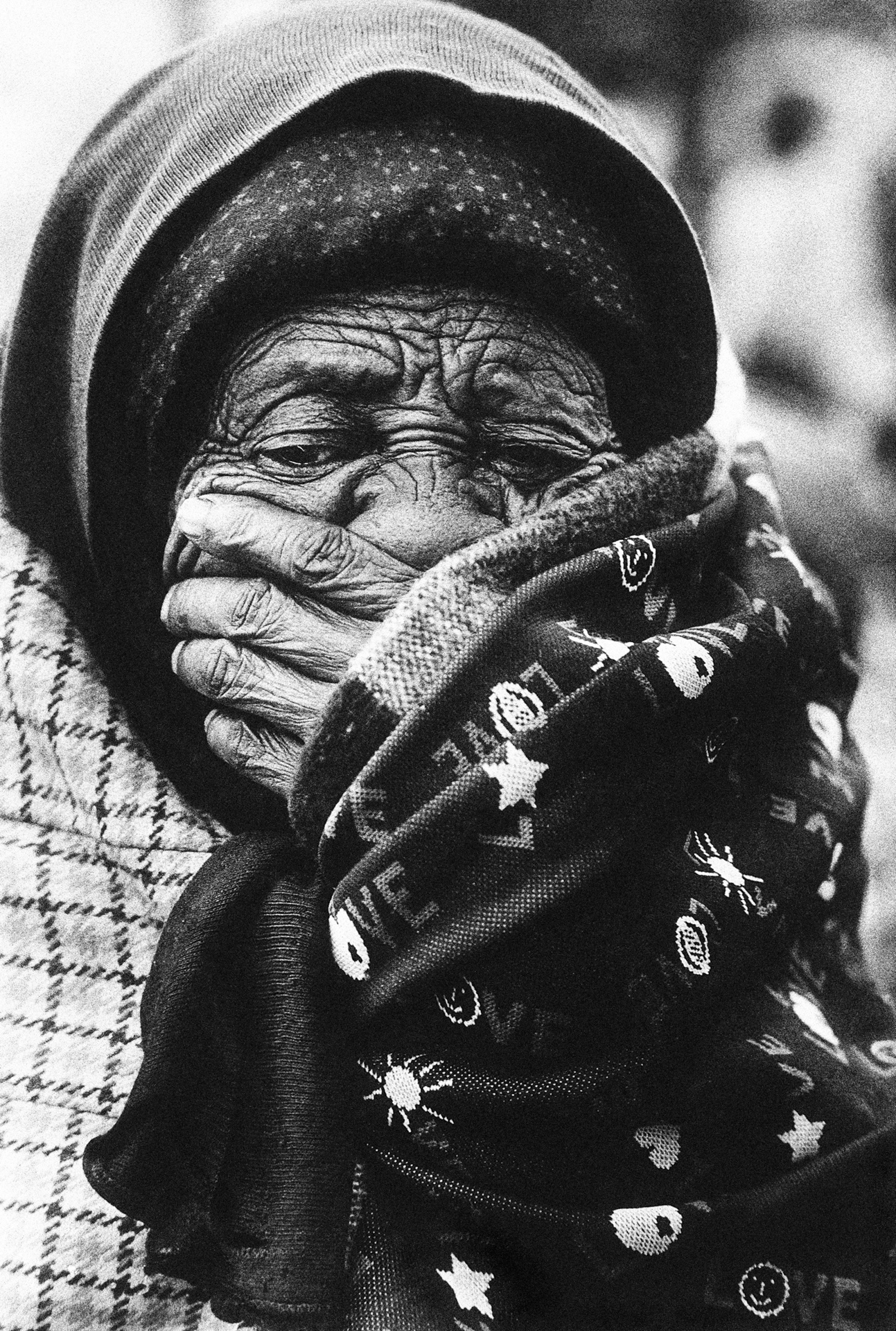
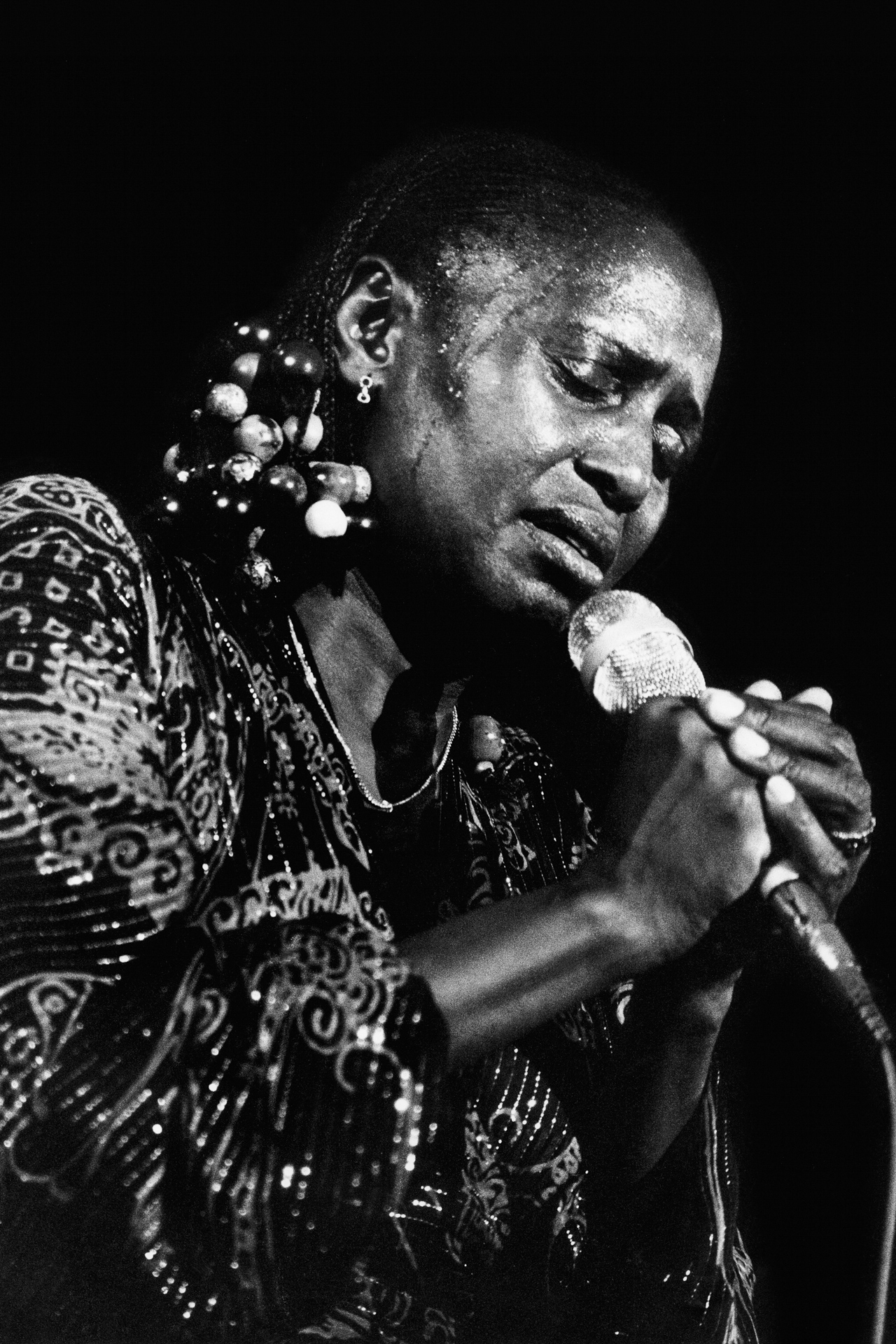
The resistance against apartheid might not have reached international attention were it not for the many talented photographers, writers, and musicians, who articulated the pain of South Africans through global platforms despite the government’s efforts to silence them. Miriam Makeba is the most famous example. However, some of the most moving of Kumalo’s photographs are of the people who weren’t famous: The ferocity with which “a Soweto mom” pumps a Black Power fist, as if her whole spirit was channelled through the gesture.
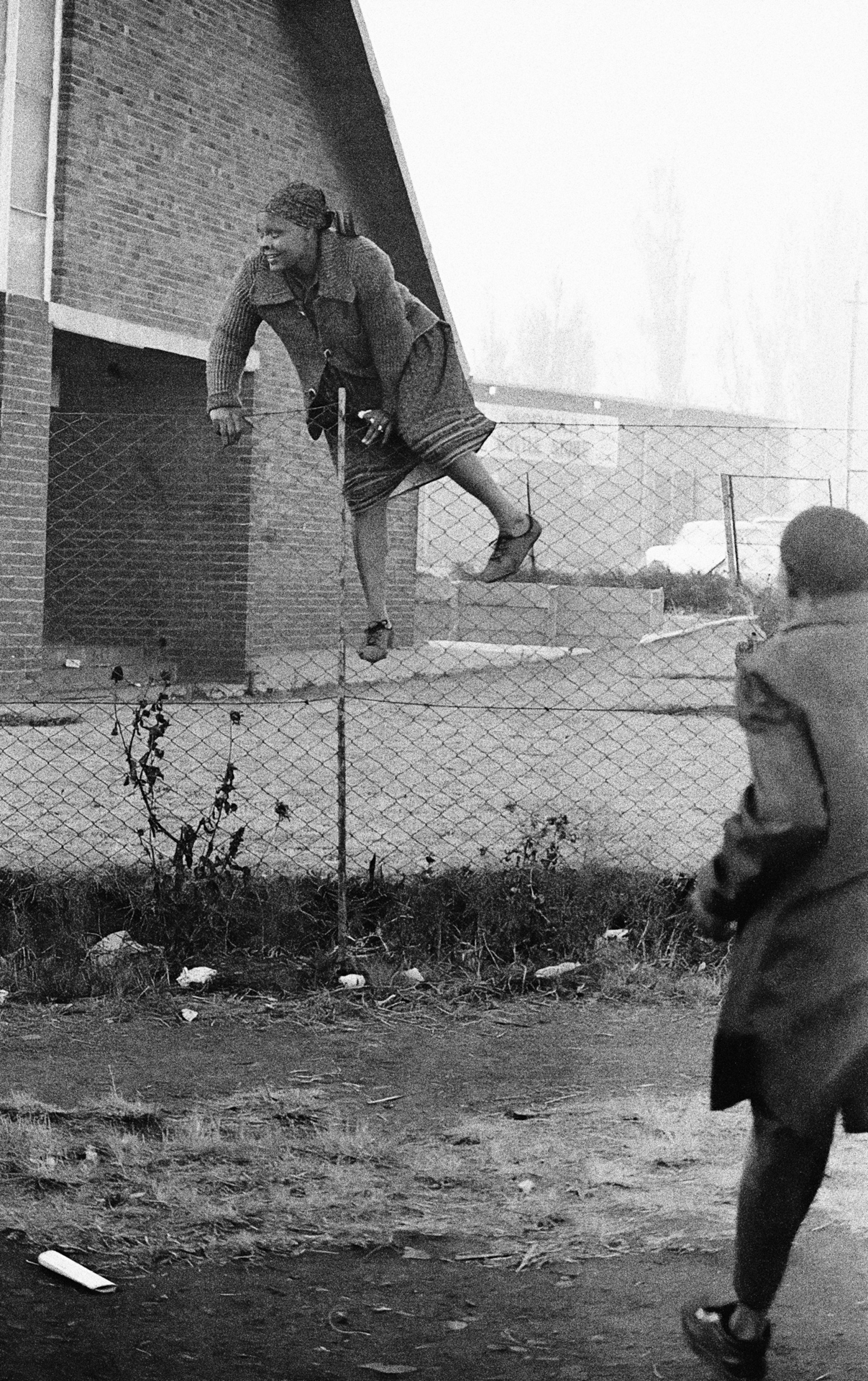
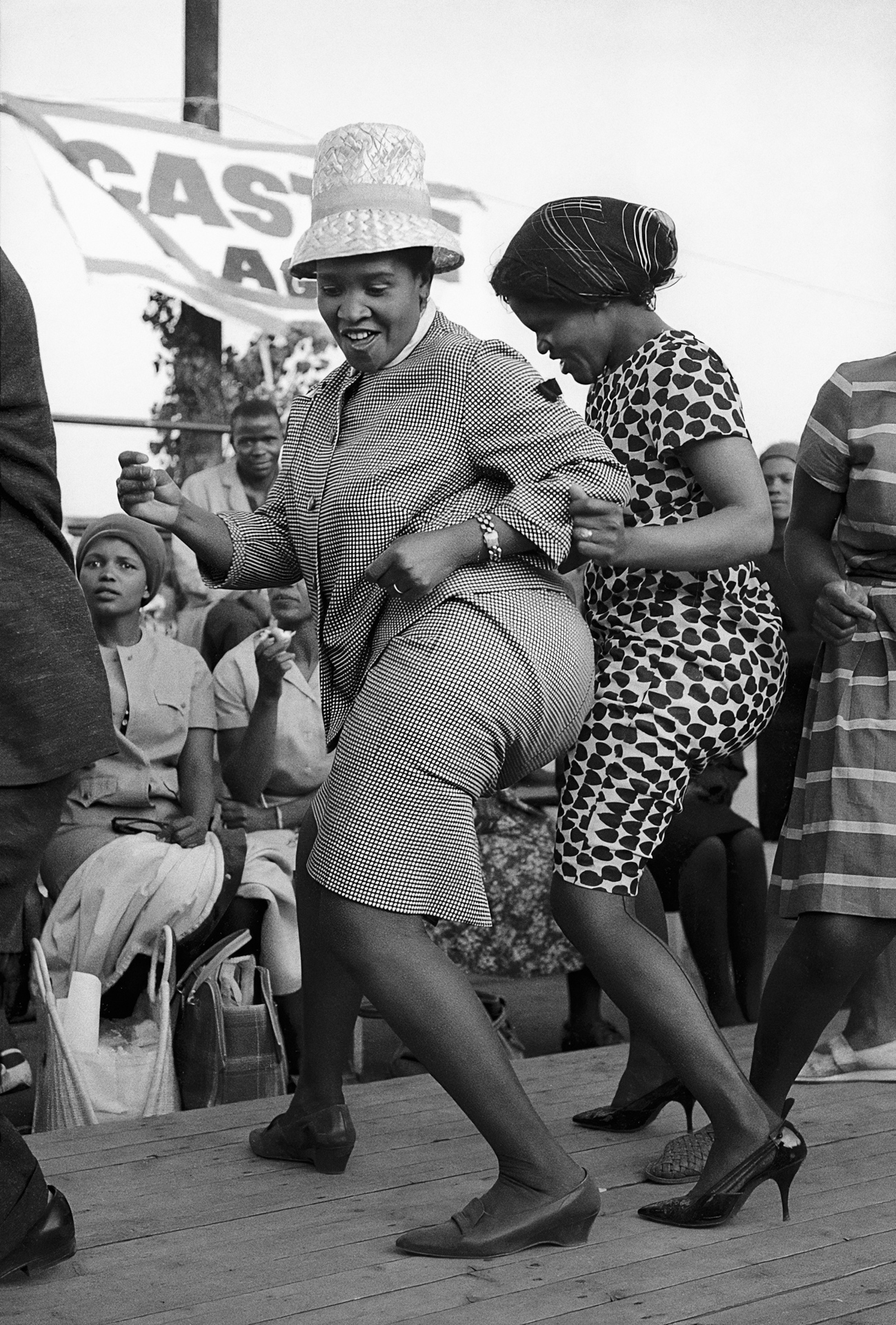
The incongruent laughter of the woman scaling the fence to evade a police raid, even though her heart must have been racing. Through this selection of Kumalo’s images we see the big, historical events and the small gestures of resistance, and we witness the multiplicity of womanhood and the capacity of South Africans to laugh, dance, and make music amidst struggle.