ALF KUMALO

The Women’s March to Freedom

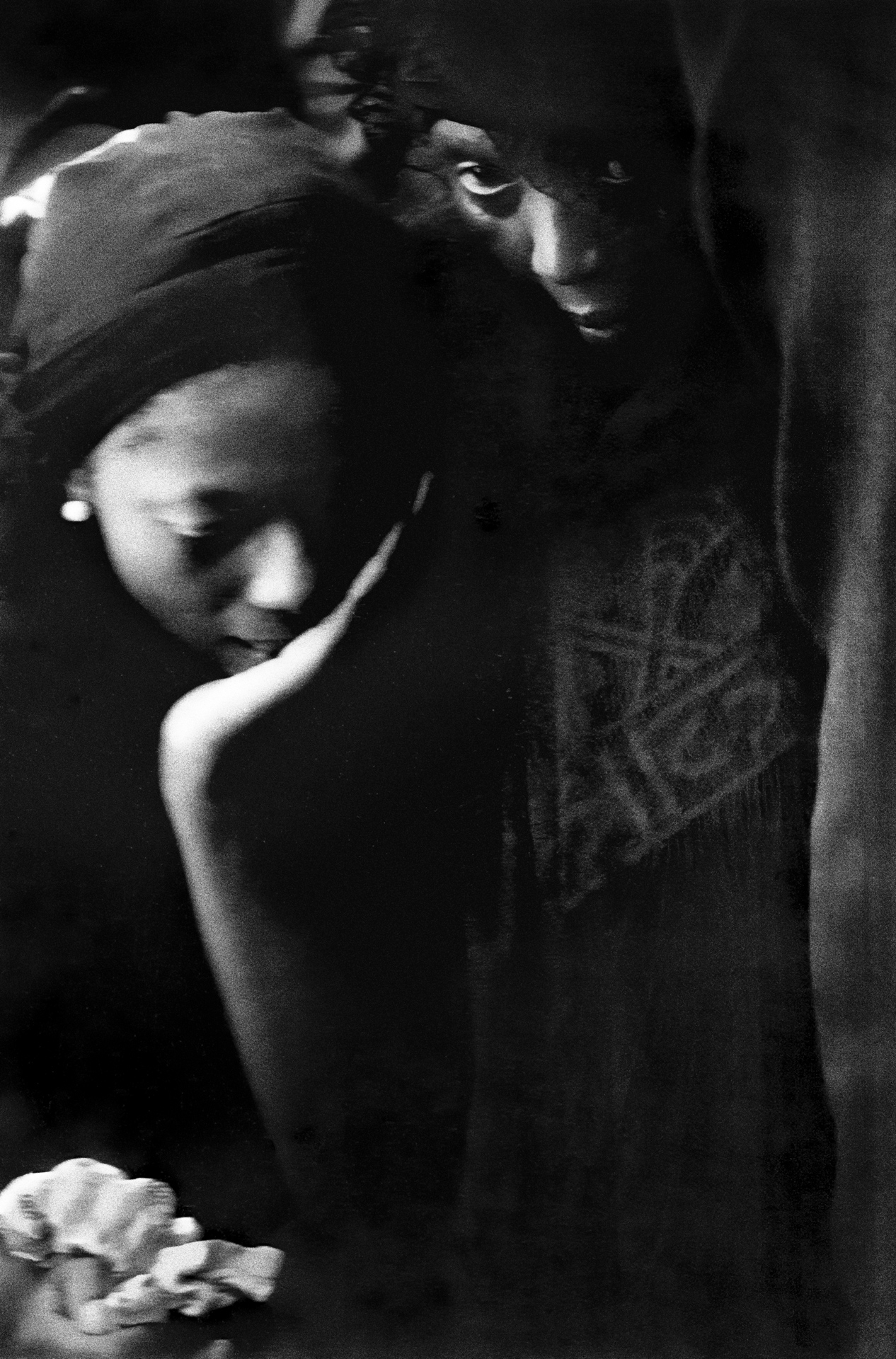
Using the 1956 Women’s March as a point of departure, the images of Alf Kumalo follow the story of both ordinary and pre-eminent women’s emotional and vibrant struggle against apartheid. The exhibition attempts to expose a multitude of both famous and ordinary women whose activism and courage formed the bedrock of the liberation movement—from the factory floor to the trade union hall to the front lines of political resistance and even to the stage.

The Women’s March to Freedom
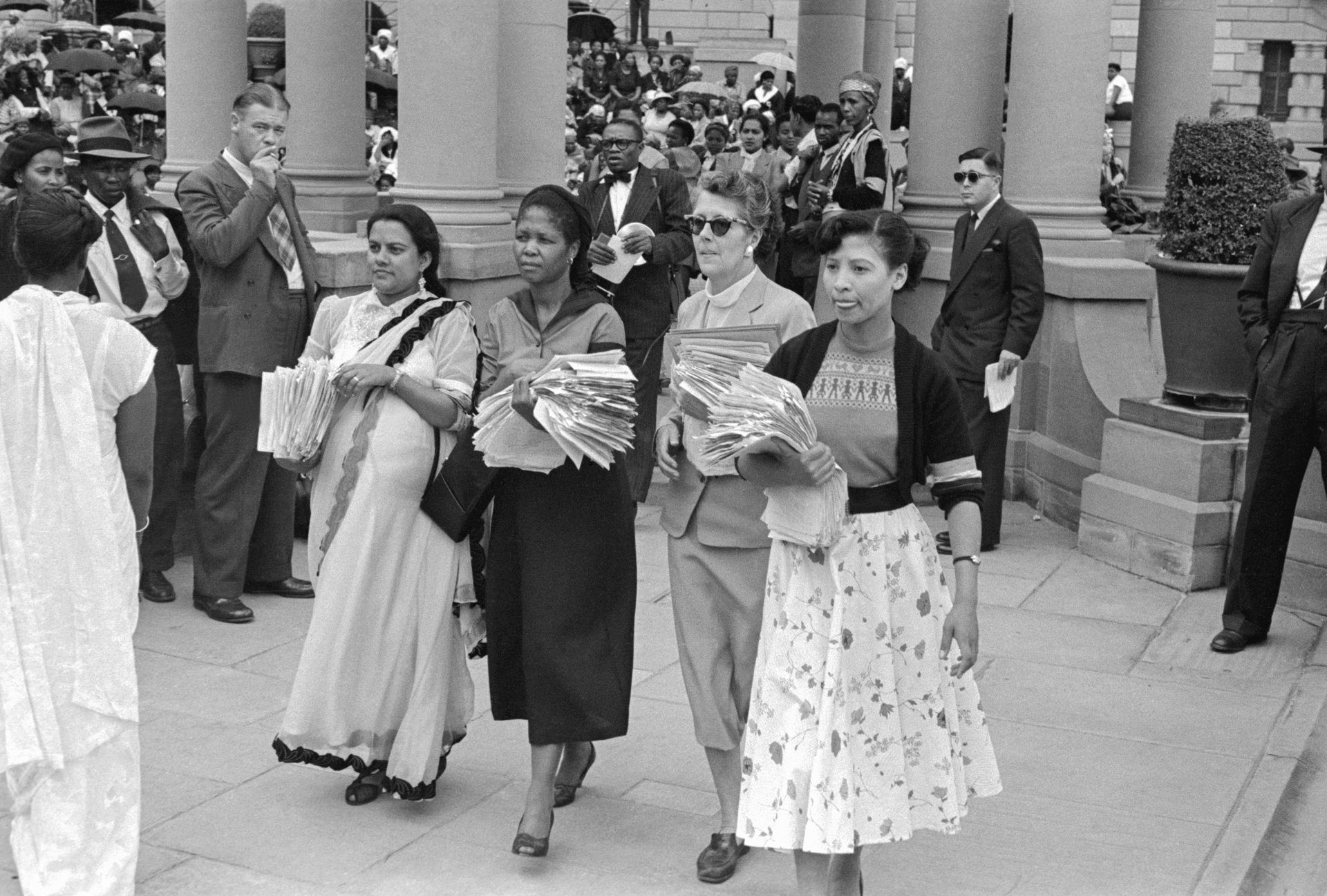
The leaders of the Women's March of 1956 clutch bundles of petitions © Alf Kumalo Estate
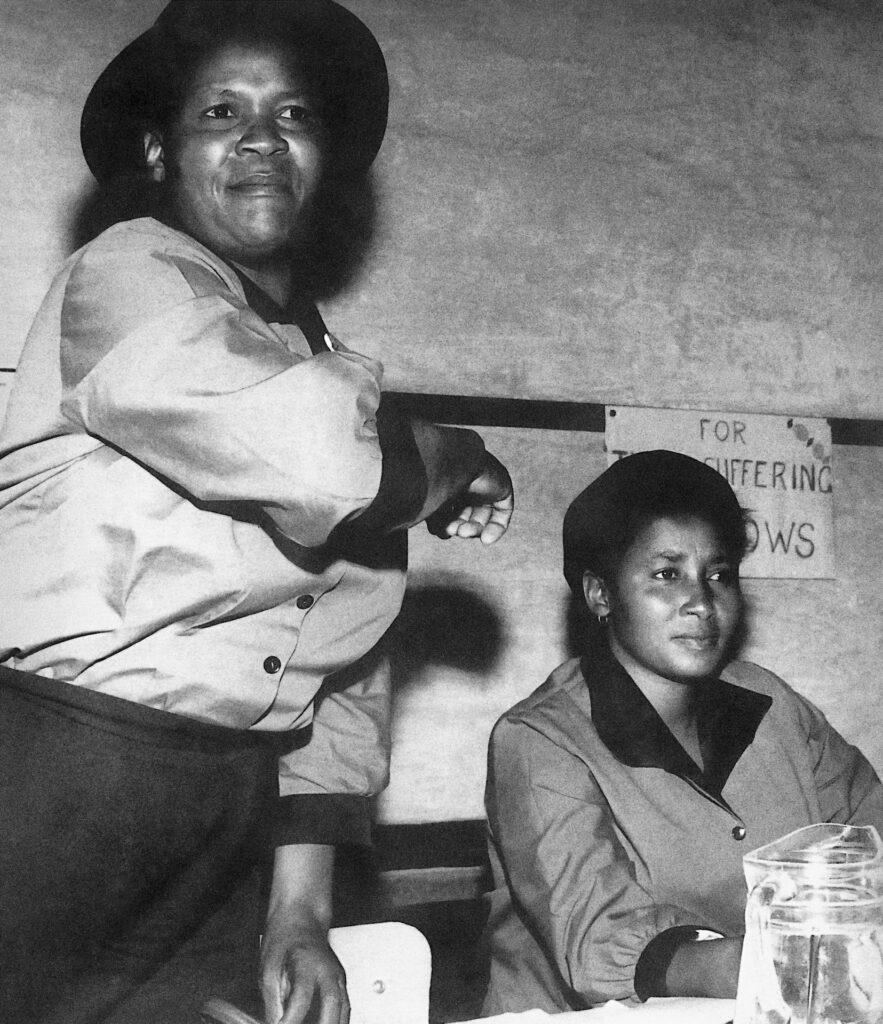
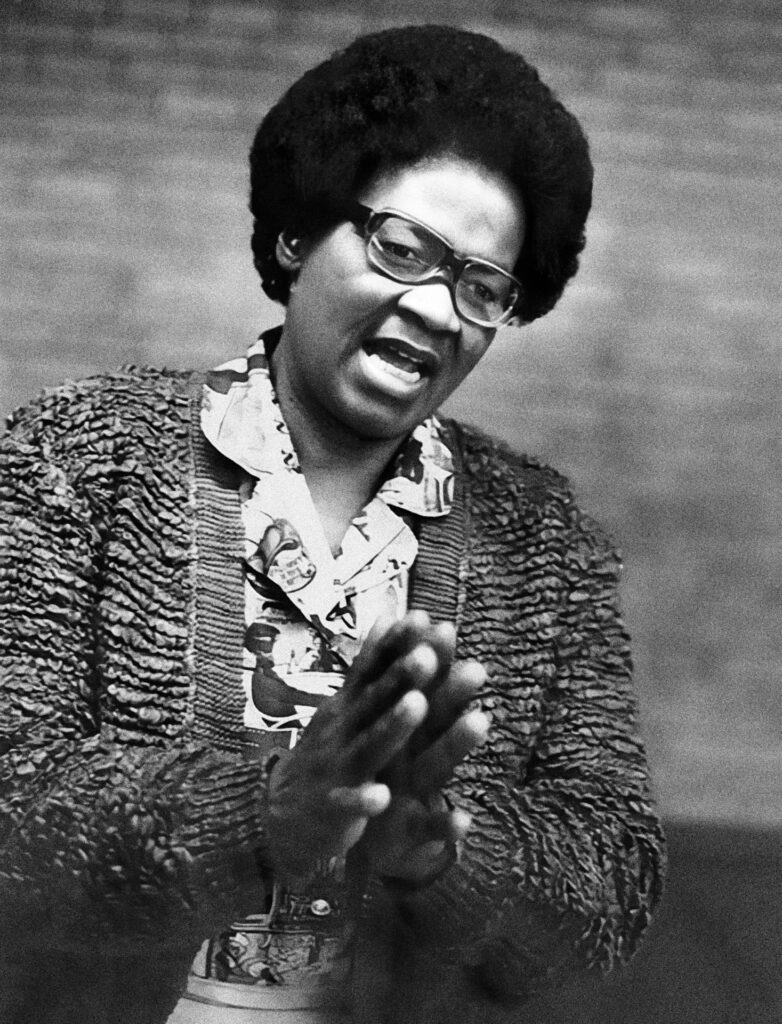
<p class="p1">An impassioned Albertina Sisulu addresses a meeting of women during the 1960s. She and her fellow activists referred to themselves as ‘The Suffering Widows’ because their husbands had been incarcerated for their political activities. During the struggle years, Sisulu was known for her tireless efforts to inspire other women. – <em>© Alf Kumalo Estate</em></p>

An impassioned Albertina Sisulu addresses a meeting of women during the 1960s. She and her fellow activists referred to themselves as ‘The Suffering Widows’ because their husbands had been incarcerated for their political activities. During the struggle years, Sisulu was known for her tireless efforts to inspire other women. – © Alf Kumalo Estate

<p>Helen Joseph and Bertha Mashaba take a tea break during proceedings in the Treason Trial. — <em>© Alf Kumalo Estate</em></p>
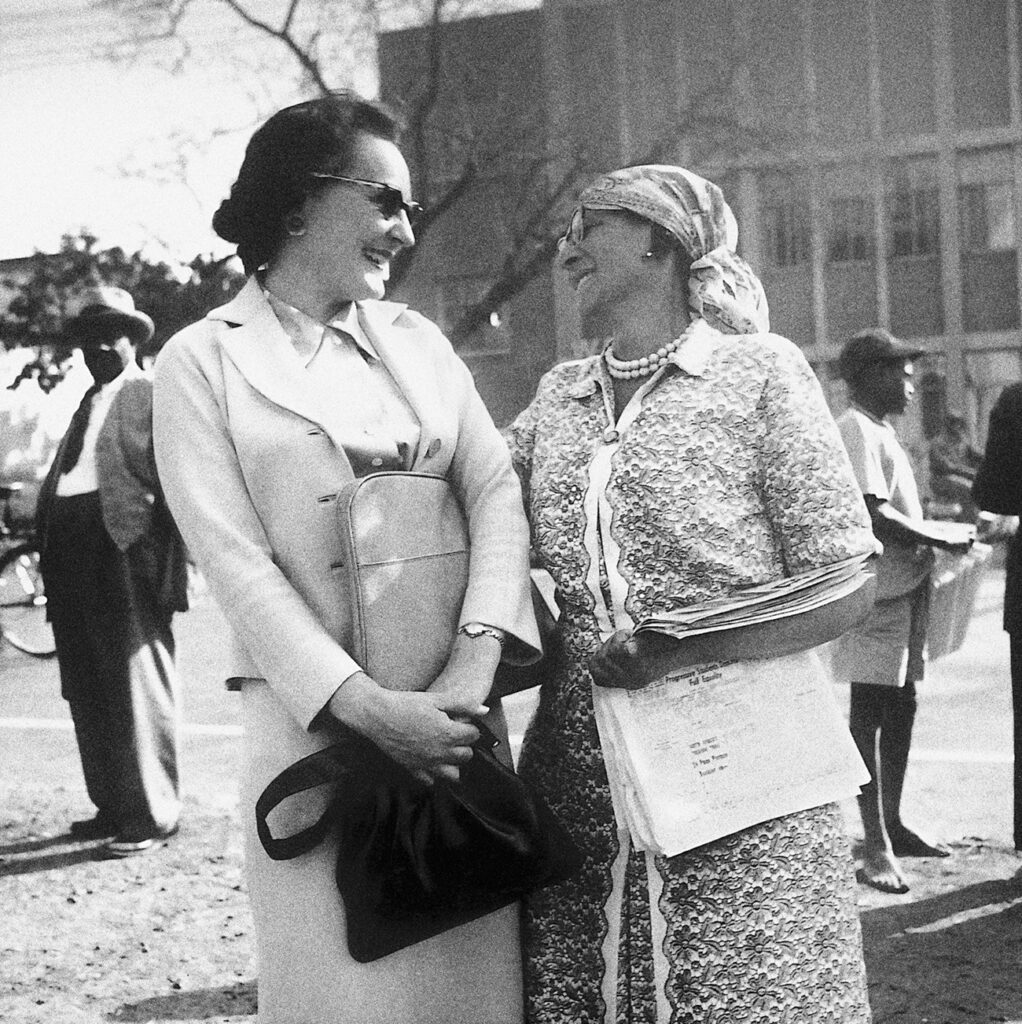
Helen Joseph (left) was a founder member of the ANC’s white ally, the Congress of Democrats (COD), and national secretary of Federation of South African Women (FEDSAW) in the 1950s. She would go on to help organise and lead the Women’s March. She was arrested on a charge of high treason and banned in 1957. She was the first person in South Africa to be placed under house arrest in 1962, and she survived several assassination attempts.

Bertha Gxowa (Mashaba) (right) was a founding member of the Federation of South African Women (FEDSAW) in 1954. She travelled the country with Helen Joseph collecting petitions that were to be delivered to the Union Buildings during the Women’s March. Between 1956 and 1958, Bertha was a defendant in the Treason Trial and in 1960 she was banned under the Suppression of Communism Act for eleven years.

Helen Joseph and Bertha Mashaba take a tea break during proceedings in the Treason Trial. — © Alf Kumalo Estate

<p>Ruth First and Frances Baard outside the Treason Trial. First would be assassinated by the apartheid state in Mozambique. In the 1960s Baard was convicted of belonging to the banned ANC. In 1969 she was released and banished to the outskirts of Pretoria. — <em>© Alf Kumalo Estate</em></p>

Ruth First and Frances Baard outside the Treason Trial. First would be assassinated by the apartheid state in Mozambique. In the 1960s Baard was convicted of belonging to the banned ANC. In 1969 she was released and banished to the outskirts of Pretoria. — © Alf Kumalo Estate

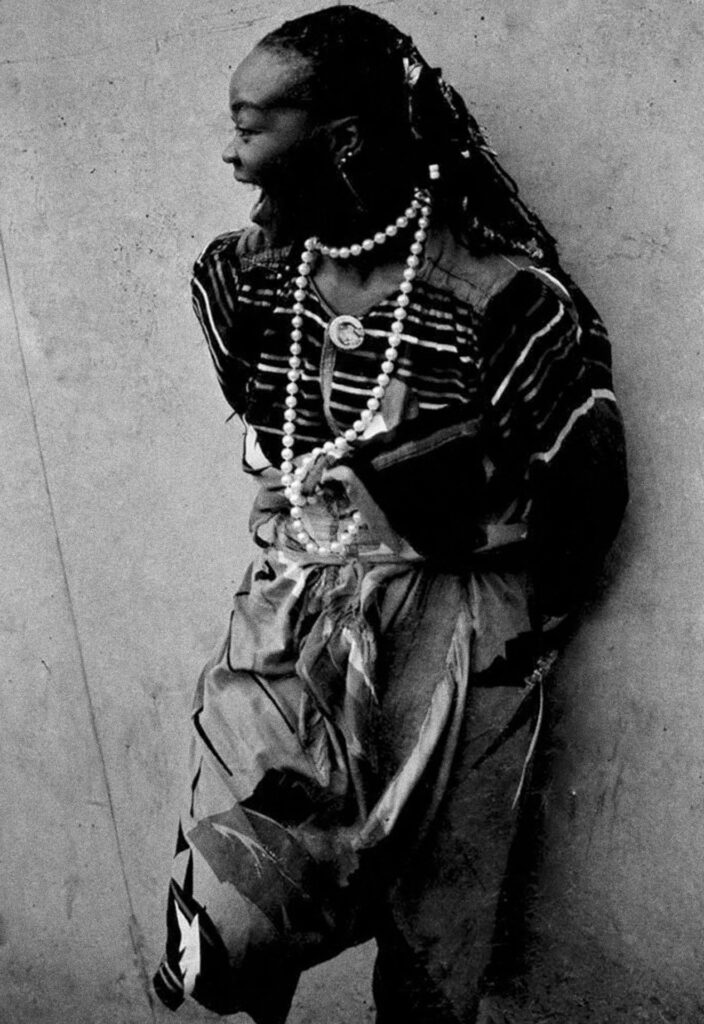
<p>Dancers at the Castle Lager Jazz Festival at Orlando Stadium in Soweto. <em>© Alf Kumalo Estate</em></p>
The Cold Castle Lager Jazz Festival was held in Soweto from 1962 to 1964. Alf Kumalo, Peter Magubane and Ernest Cole attended these events and a select group of photos have survived of which Kumalo’s ‘Women Dancing’ remains perhaps the most iconic. Just how and why South African Breweries sponsored these remarkable multiracial events is a story rarely told and much of which is lost in the lagerly foam of forgetting. However, what we do know is that some of South Africa’s greatest jazz moments occurred and were recorded at these events and that tens of thousands of people of all races attended them. As Lewis Nkosi wrote, out of a time of extraordinary violence and oppression came  ‘an ebullient sound more intuitive than any outside the United States of what jazz is supposed to celebrate — the moment of love, lust, bravery, increase, fruition, and all those vivid dancing good times of the body when the Now may be all there is.’

Dancers at the Castle Lager Jazz Festival at Orlando Stadium in Soweto. © Alf Kumalo Estate

<p>Young women converse around a surly-faced policeman outside the courtroom of the Rivonia Trial. <em>© Alf Kumalo Estate</em></p>
<p> </p>

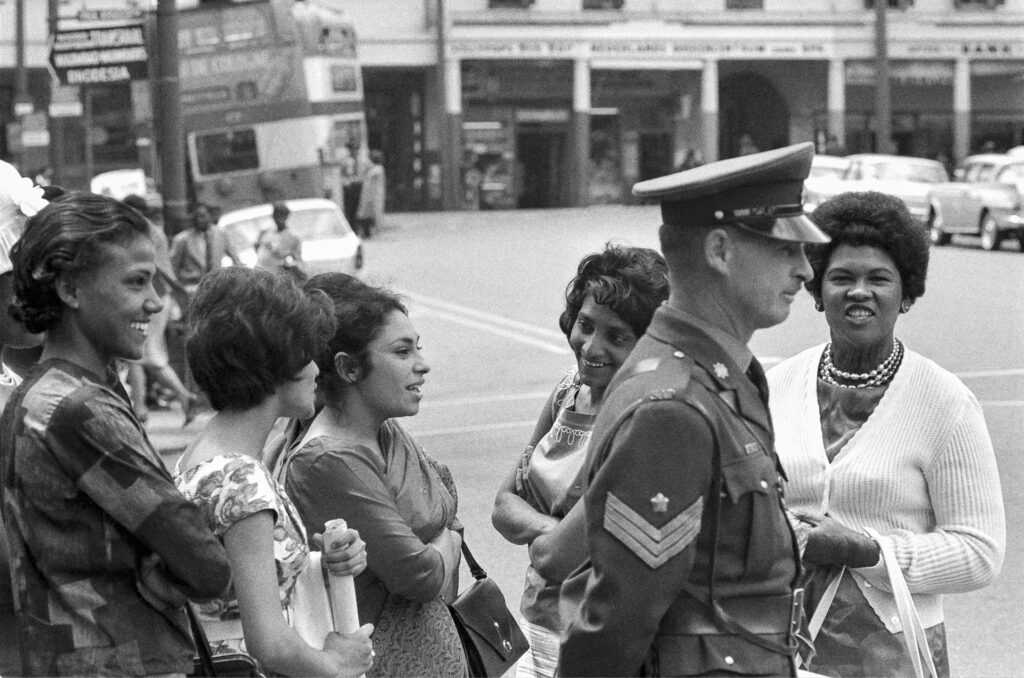
Young women converse around a surly-faced policeman outside the courtroom of the Rivonia Trial. © Alf Kumalo Estate


<p>Winnie Mandela and Albertina Sisulu in traditional Xhosa dress outside the Rivonia Trial. <em>© Alf Kumalo Estate</em></p>

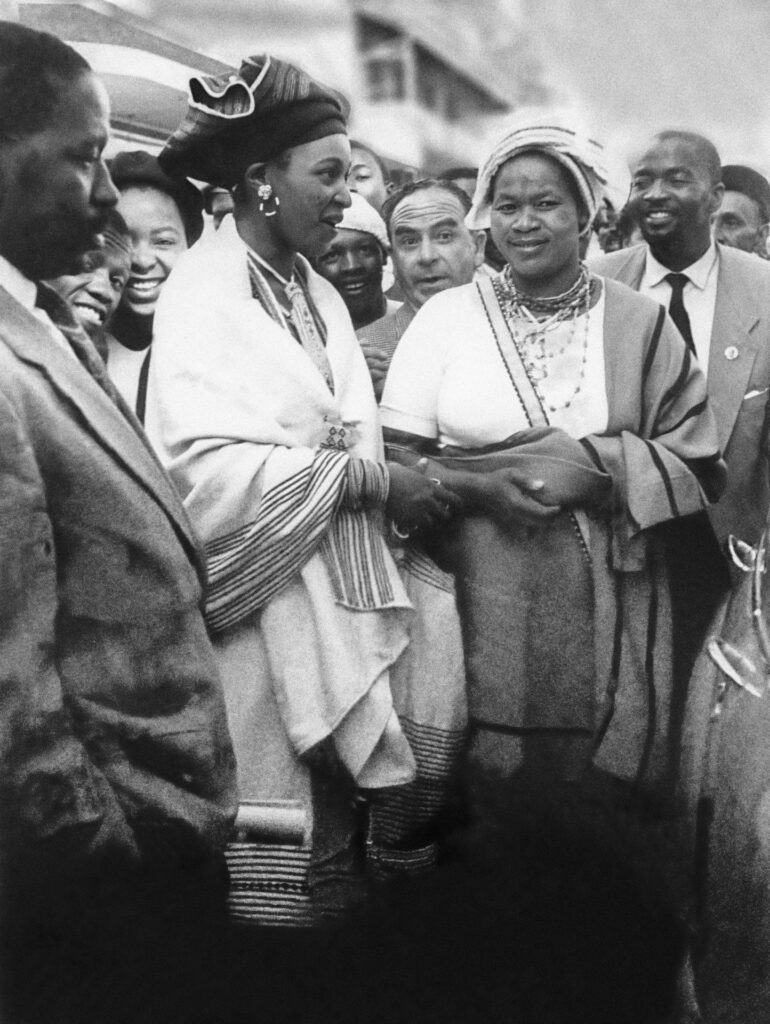
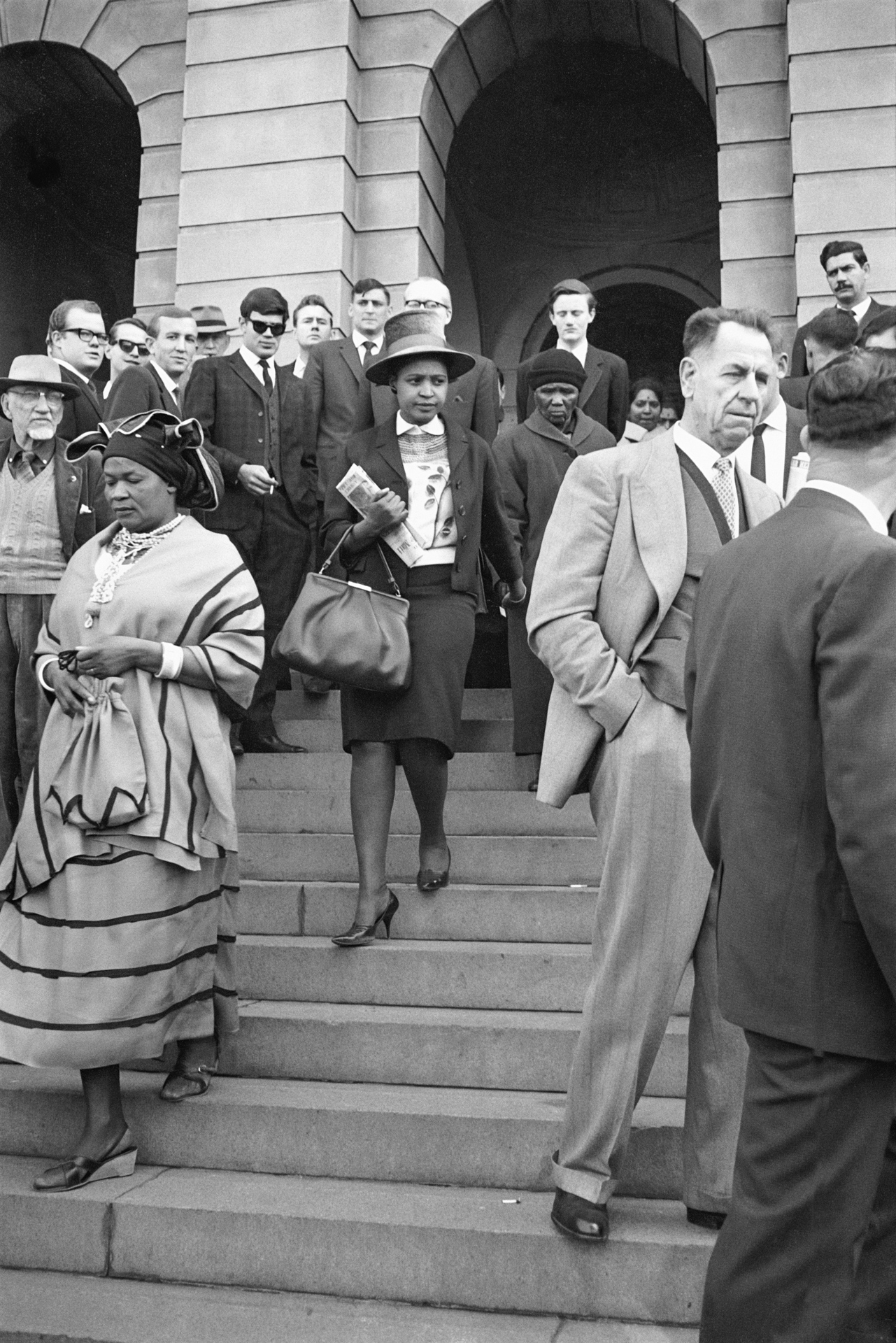
Winnie Mandela and Albertina Sisulu in traditional Xhosa dress outside the Rivonia Trial. © Alf Kumalo Estate

<p>A mother remembers. Noqaphi Nosekeni (Nelson Mandela’s mother) speaks to her grandchildren while holding a picture of her imprisoned son. <em>© Alf Kumalo Estate</em></p>

A mother remembers. Noqaphi Nosekeni (Nelson Mandela’s mother) speaks to her grandchildren while holding a picture of her imprisoned son. © Alf Kumalo Estate

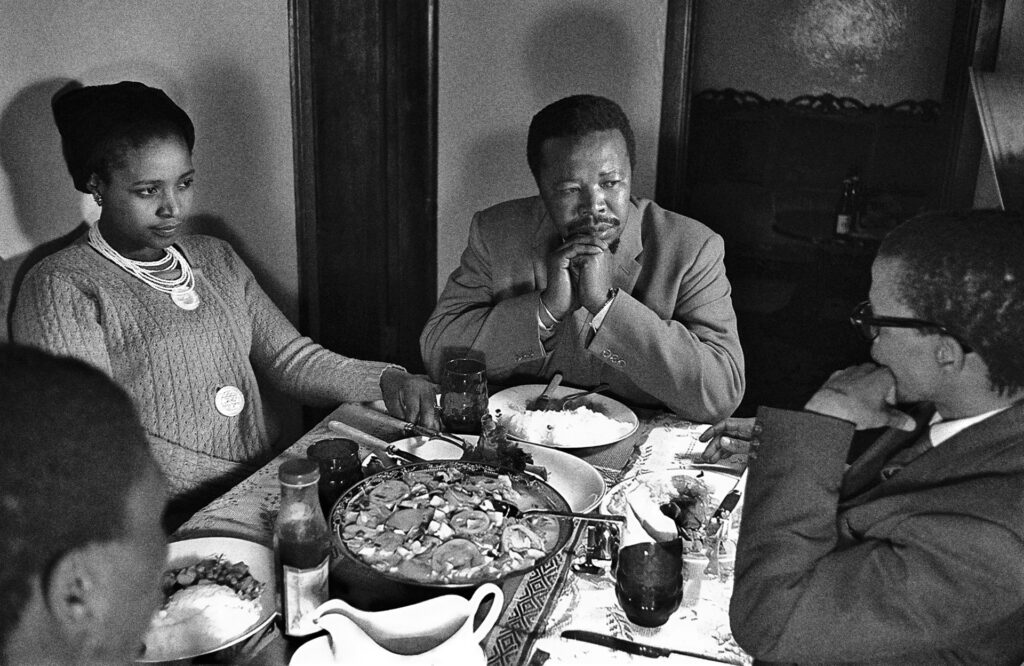
<p>Winnie Mandela eats with the Paramount Chief of the amaThembu, Sabata Dalindyebo, and journalist Harry Mashabela. <em>© Alf Kumalo Estate</em></p>

Winnie Mandela eats with the Paramount Chief of the amaThembu, Sabata Dalindyebo, and journalist Harry Mashabela. © Alf Kumalo Estate

<p>Albertina Sisulu offers sage counsel. Her compassionate and selfless character led to her being affectionately referred to as ‘the mother of the nation.’ Albertina was repeatedly banned and jailed by the apartheid state. <em>© Alf Kumalo Estate</em></p>

Albertina Sisulu offers sage counsel. Her compassionate and selfless character led to her being affectionately referred to as ‘the mother of the nation.’ Albertina was repeatedly banned and jailed by the apartheid state. © Alf Kumalo Estate

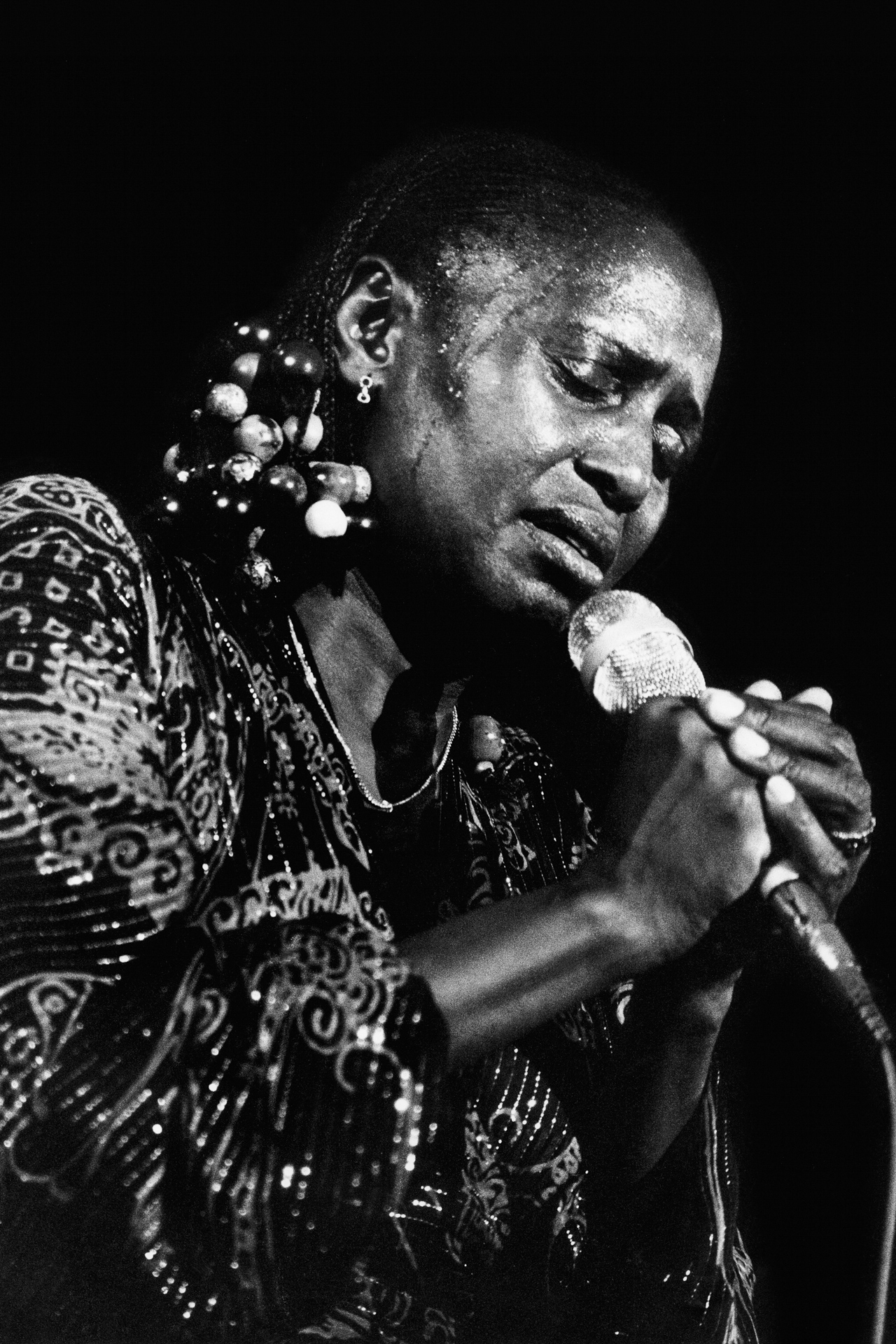
<p>Miriam Makeba experiences a moment that would have been impossible in her home country. <em>© Alf Kumalo Estate</em></p>

Miriam Makeba experiences a moment that would have been impossible in her home country. Makeba lived in exile in New York from 1960 after the South African government revoked her passport. On 16 July 1963, she addressed the United Nations Special Committee on the Policies of Apartheid. “My country has been turned by the Verwoerd Government into a huge prison,” she said. “The time has come for the whole of humanity to shout ‘halt’ and to act with firmness to stop these crazy rulers from dragging our country into a horrifying disaster.” In total she addressed the UN about the horrors of apartheid four times – twice in the 1960s, and twice more after the Soweto Uprising in 1976.

Miriam Makeba experiences a moment that would have been impossible in her home country. © Alf Kumalo Estate

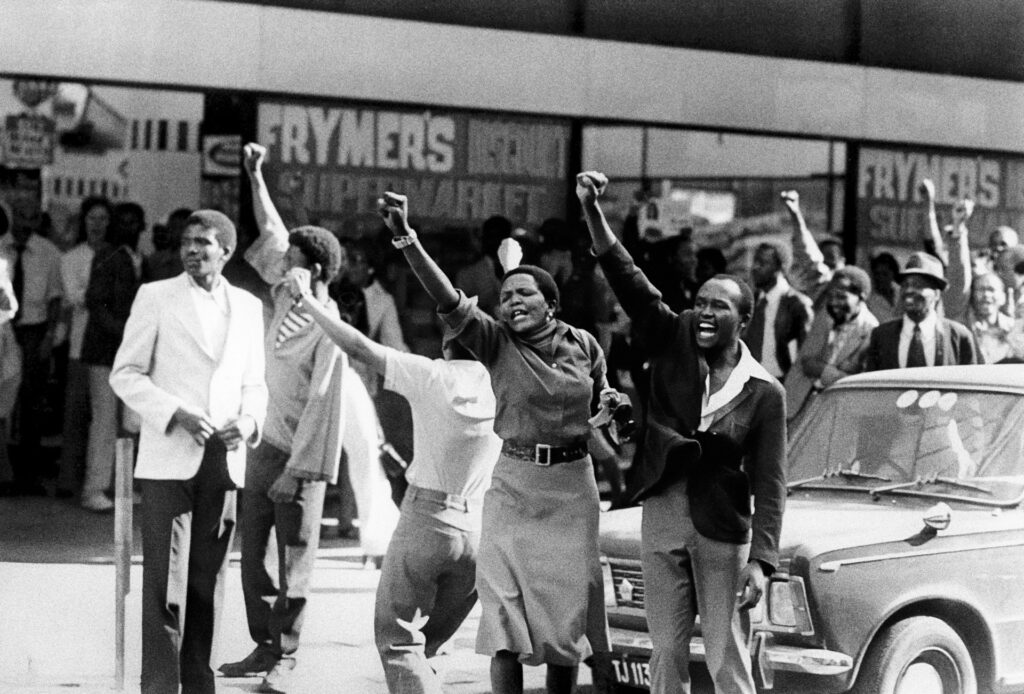
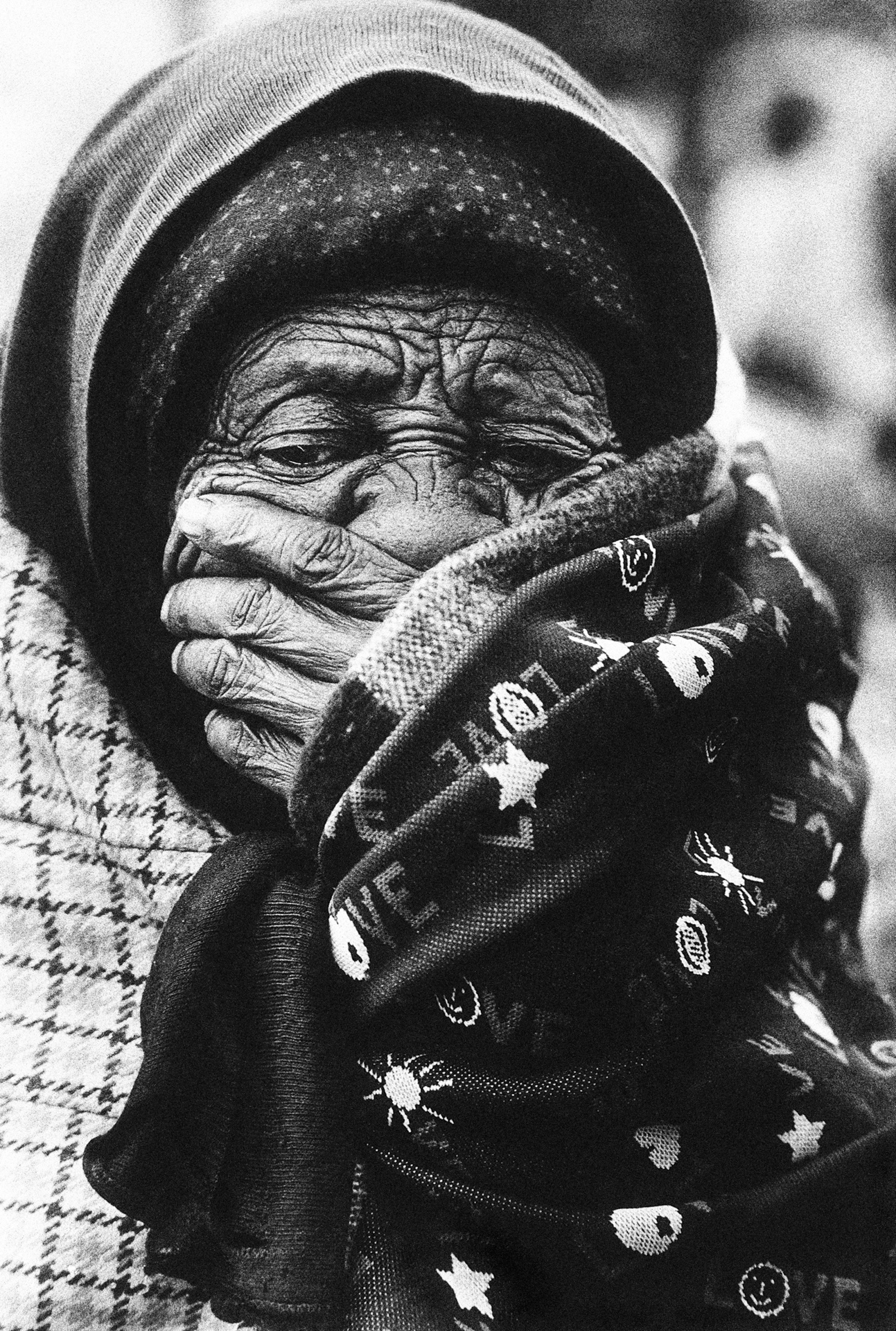
<p>A woman referred to as ‘a Soweto mom’ protests on 11 March 1976 outside the Johannesburg Supreme Court. She, along with several others, was arrested and forcibly put into a kwela-kwela (police van). <em>© Alf Kumalo Estate</em></p>

A woman referred to as ‘a Soweto mom’ protests on 11 March 1976 outside the Johannesburg Supreme Court. She, along with several others, was arrested and forcibly put into a kwela-kwela (police van). © Alf Kumalo Estate

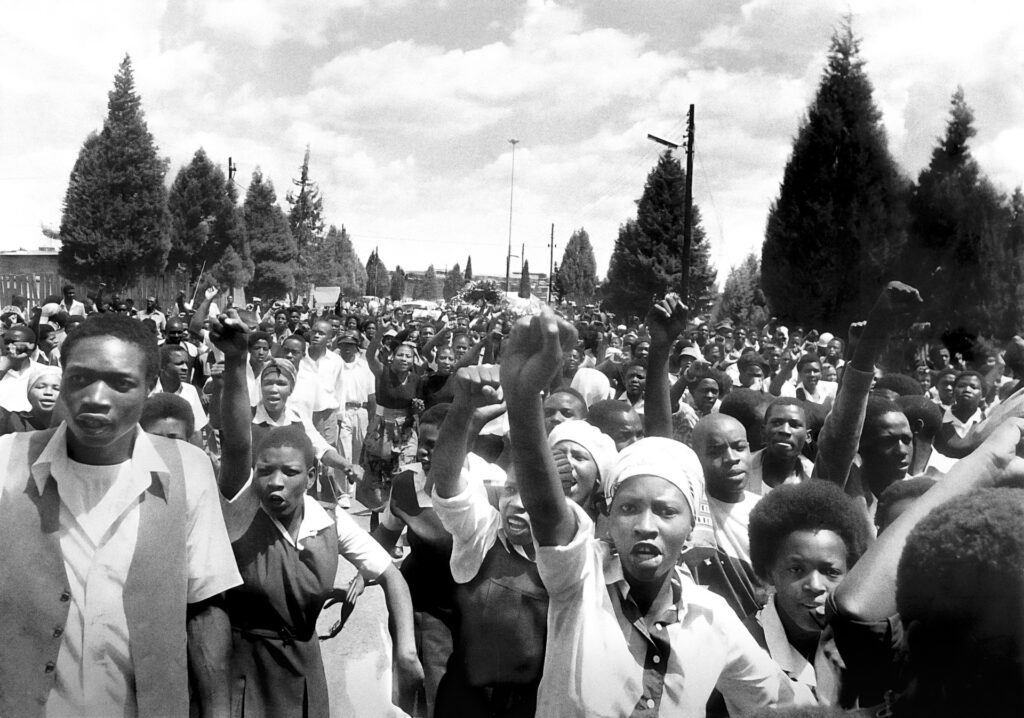
<p>Young mourners, enraged by the massacre of 16 June, march at the Doornkop Cemetery in Soweto at the burial of the victims. <em>© Alf Kumalo Estate</em></p>

Young mourners, enraged by the massacre of 16 June, march at the Doornkop Cemetery in Soweto at the burial of the victims. © Alf Kumalo Estate

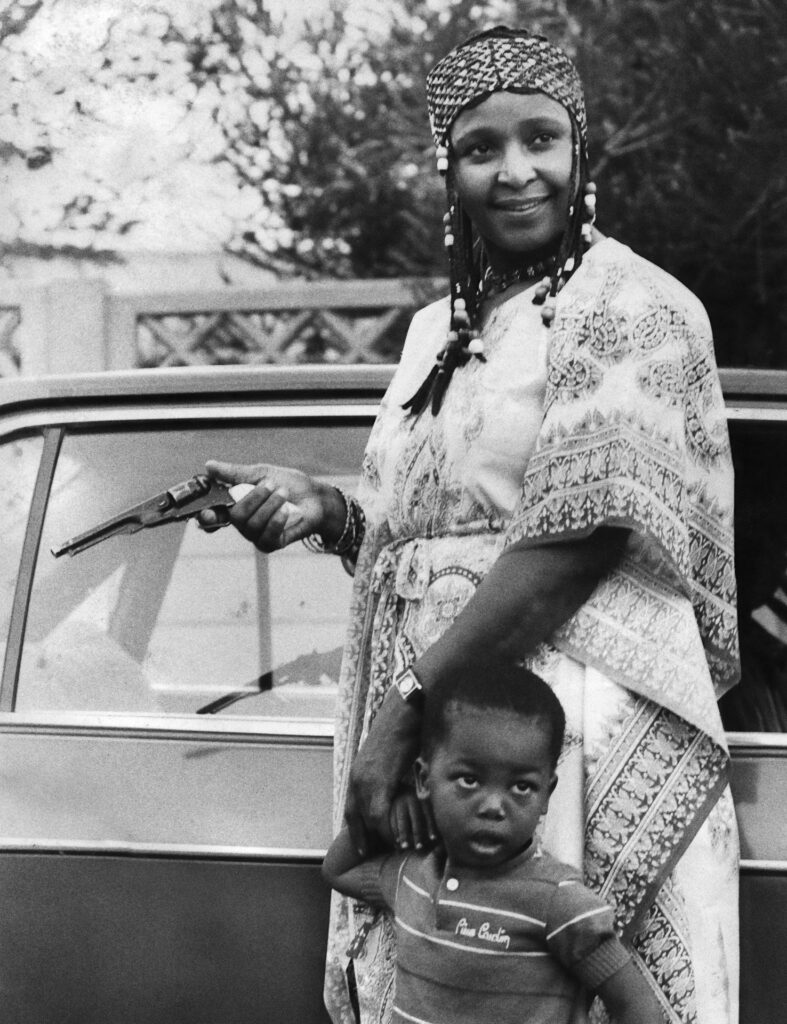
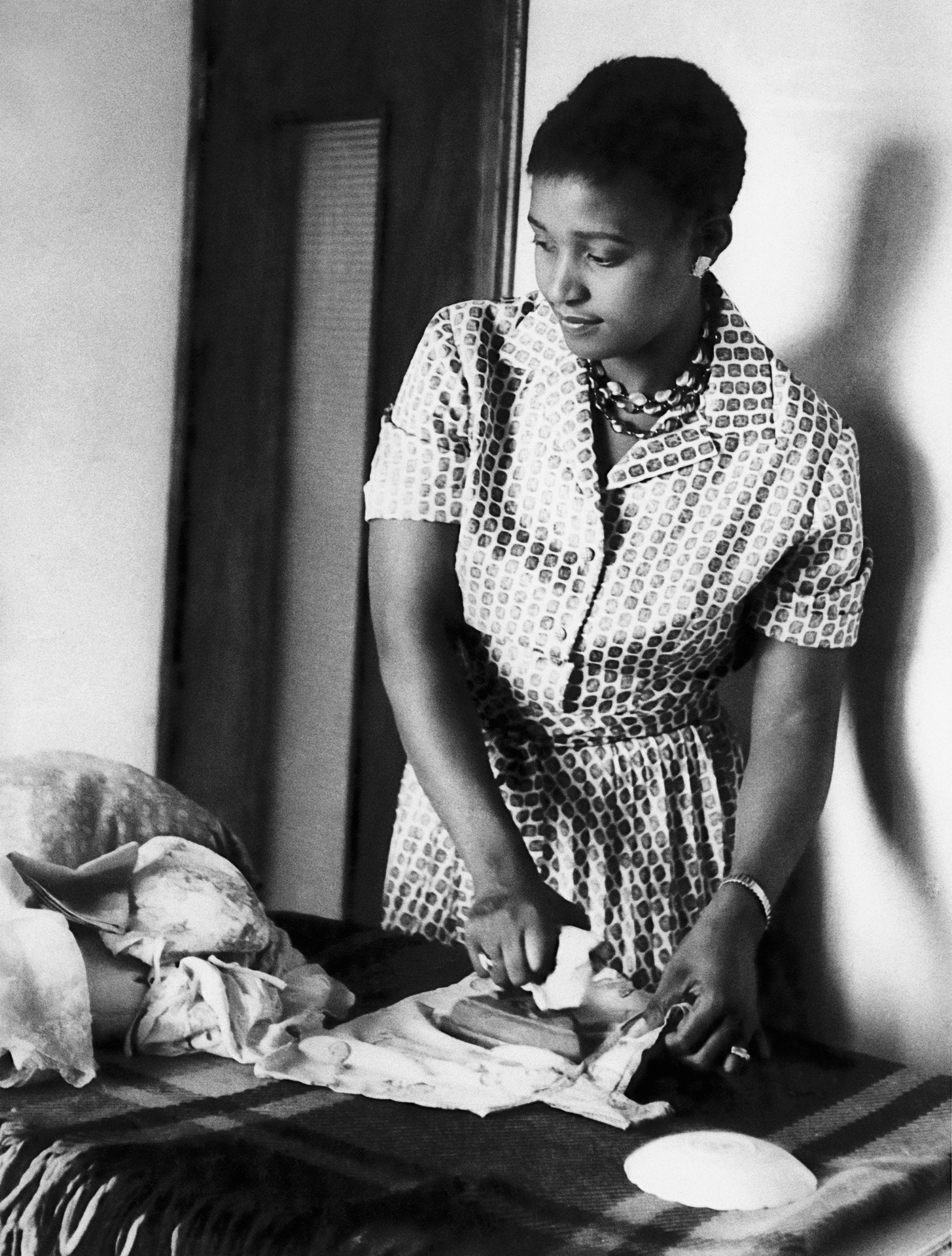
<p>Winnie Mandela plays with her grandson and a toy gun in Soweto. <em>© Alf Kumalo Estate</em></p>
Winnie Mandela plays with her grandson and a toy gun in Soweto. © Alf Kumalo Estate

<p>Zindzi Mandela at the 1985 UDF rally in Soweto. <em>© Alf Kumalo Estate</em></p>
Zindzi Mandela at the 1985 UDF rally in Soweto, where she read out a letter smuggled out of prison by her father. The rally was organised to celebrate Archbishop Tutu receiving the Nobel Peace Prize, Jabulani Stadium, Soweto, 10 February 1985.

My Father Says:

I cherish my own freedom dearly, but I care even more for your freedom. Too many have died since I went to prison. Too many have suffered for the love of freedom. I owe it to their widows, to their orphans, to their mothers and to their fathers who have grieved and wept for them. Not only I have suffered during these long, lonely, wasted years. I am not less life-loving than you are. But I cannot sell my birthright, nor am I prepared to sell the birthright of the people to be free. I am in prison as the representative of the people and of your organisation, the African National Congress, which was banned.

What freedom am I being offered while the organisation of the people remains banned? What freedom am I being offered when I may be arrested on a pass offence? What freedom am I being offered to live my life as a family with my dear wife who remains in banishment in Brandfort? What freedom am I being offered when I must ask for permission to live in an urban area? What freedom am I being offered when I need a stamp in my pass to seek work? What freedom am I being offered when my very South African citizenship is not respected?

Zindzi Mandela at the 1985 UDF rally in Soweto. © Alf Kumalo Estate

<p>Brenda Fassie takes time out from performing at Ellis Park, April 1984. <em>© Alf Kumalo Estate</em></p>

Brenda Fassie takes time out from performing at Ellis Park, April 1984. © Alf Kumalo Estate

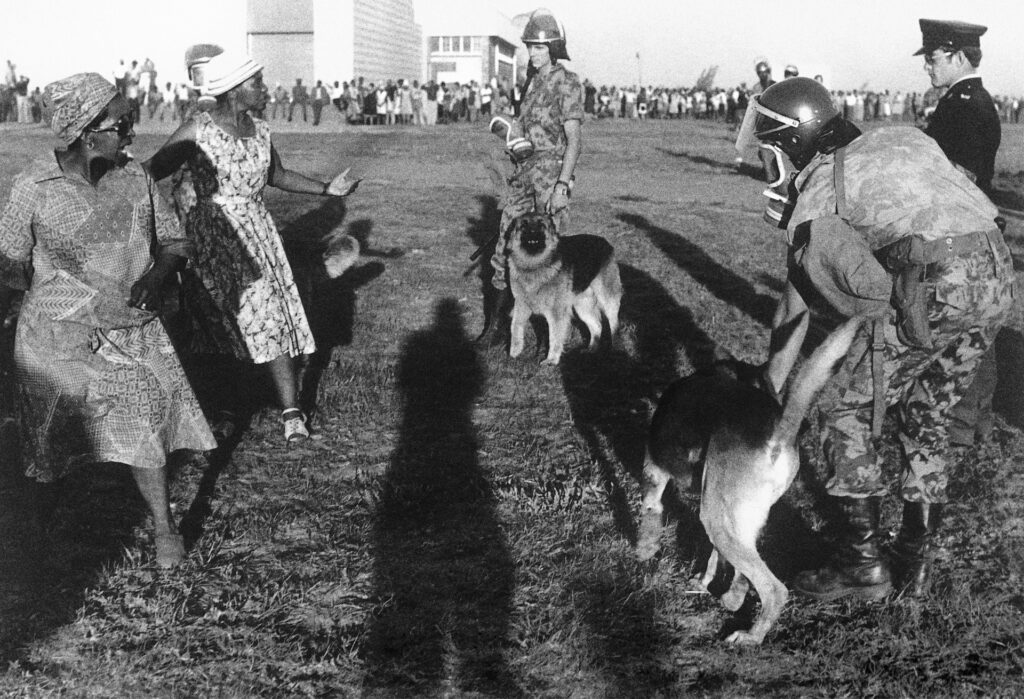
<p>Trade unionists Emma Mashinini and Joyce Piliso-Seroke face the police and their dogs in Soweto, 1980. <em>© Alf Kumalo Estate</em></p>

Trade unionists Emma Mashinini and Joyce Piliso-Seroke face the police and their dogs in Soweto, 1980. © Alf Kumalo Estate

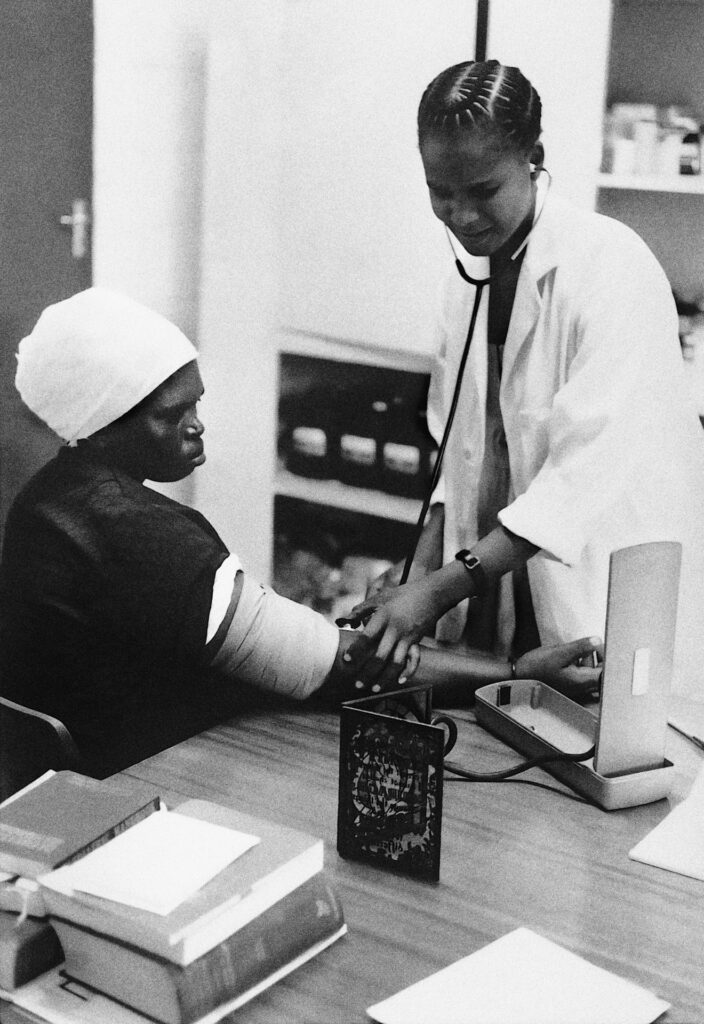
<p>Dr Mamphela Ramphele attends to a patient in Lenyenye, near the town of Tzaneen, where she was banished until 1984. <em>© Alf Kumalo Estate</em></p>

Dr Mamphela Ramphele attends to a patient in Lenyenye, near the town of Tzaneen, where she was banished until 1984. © Alf Kumalo Estate

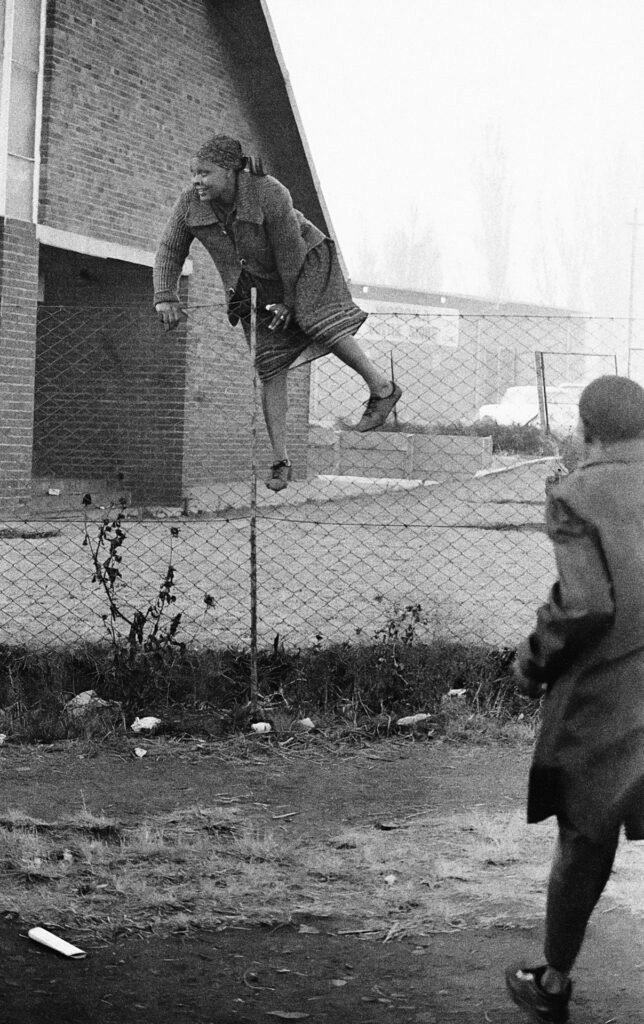
<p>A woman climbs a fence to escape a police crackdown at the Regina Mundi church in Soweto. <em>© Alf Kumalo Estate</em></p>
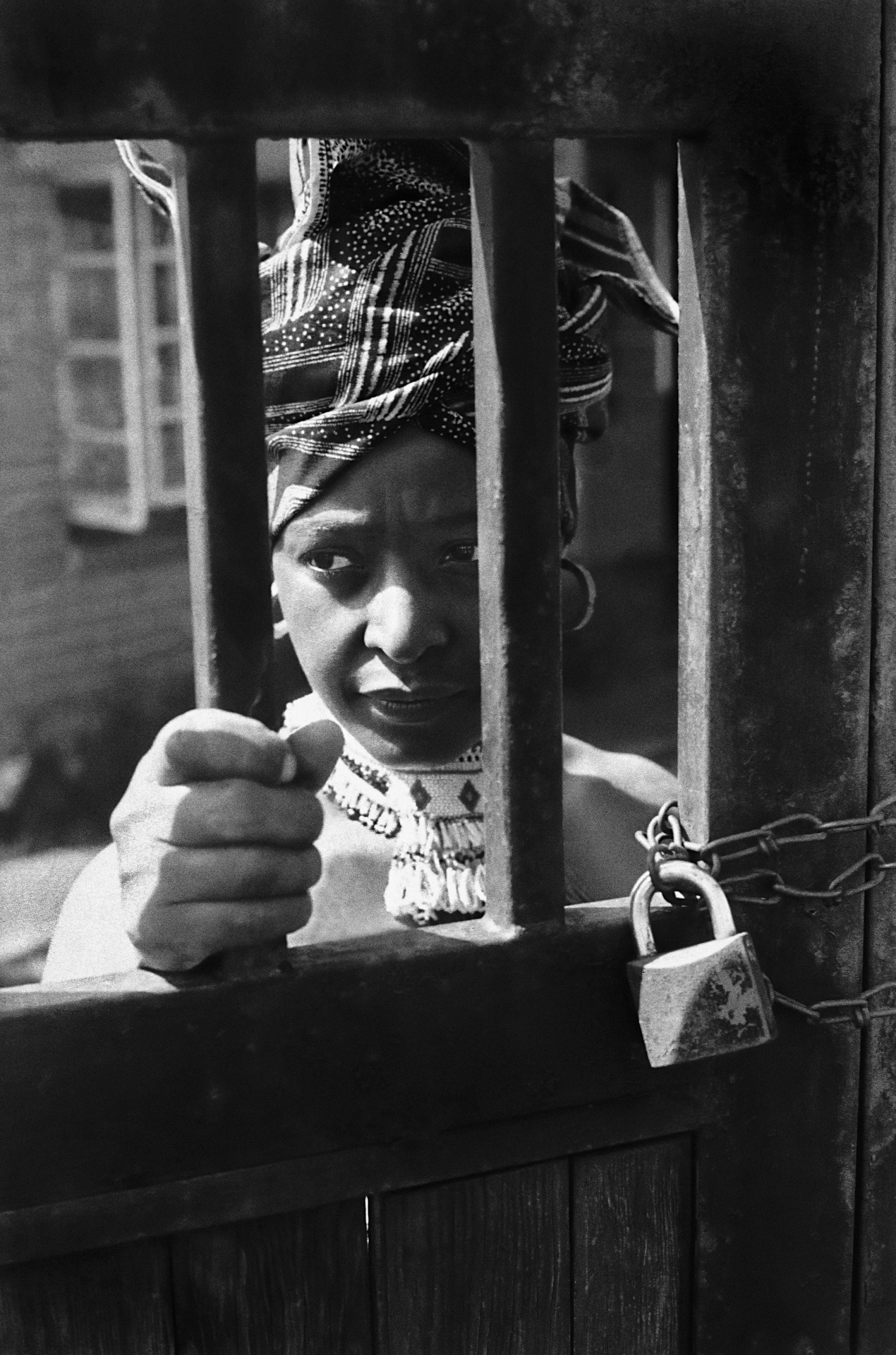
A woman climbs a fence to escape a police crackdown at the Regina Mundi church in Soweto. © Alf Kumalo Estate

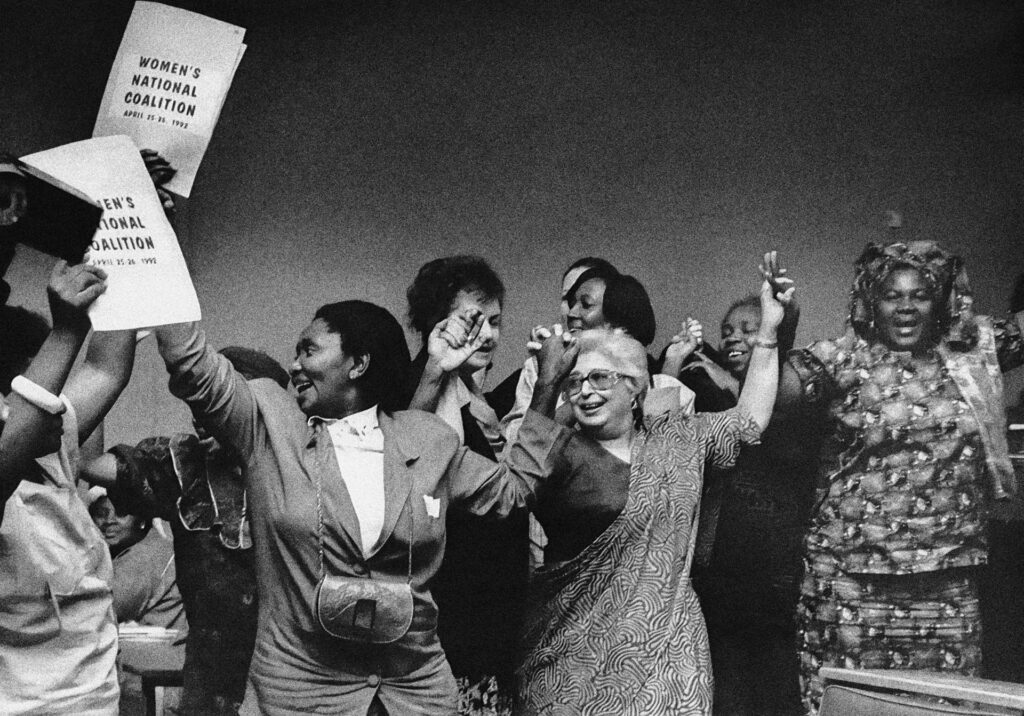
<p>Female liberation struggle leaders celebrate the formation of the National Women’s Coalition in 1991. Frene Ginwala (centre). <em>© Alf Kumalo Estate</em></p>
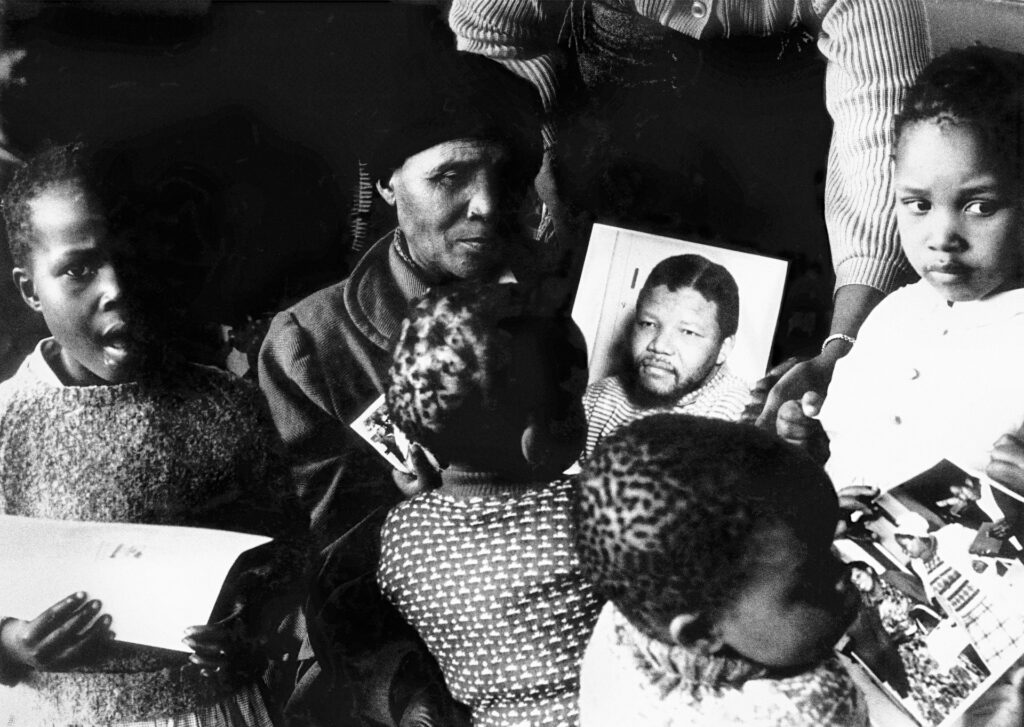
Female liberation struggle leaders celebrate the formation of the National Women’s Coalition in 1991. Frene Ginwala (centre). © Alf Kumalo Estate